Friday, September 28, 2012

UNVEILING OF NEW HISTORICAL MARKER - BERNARDO DE GALVEZ 27 Sept 2012

Spanish Colonial Louisiana
Governor-General
Bernardo de Galvez
(Photo by Michael Henderson)

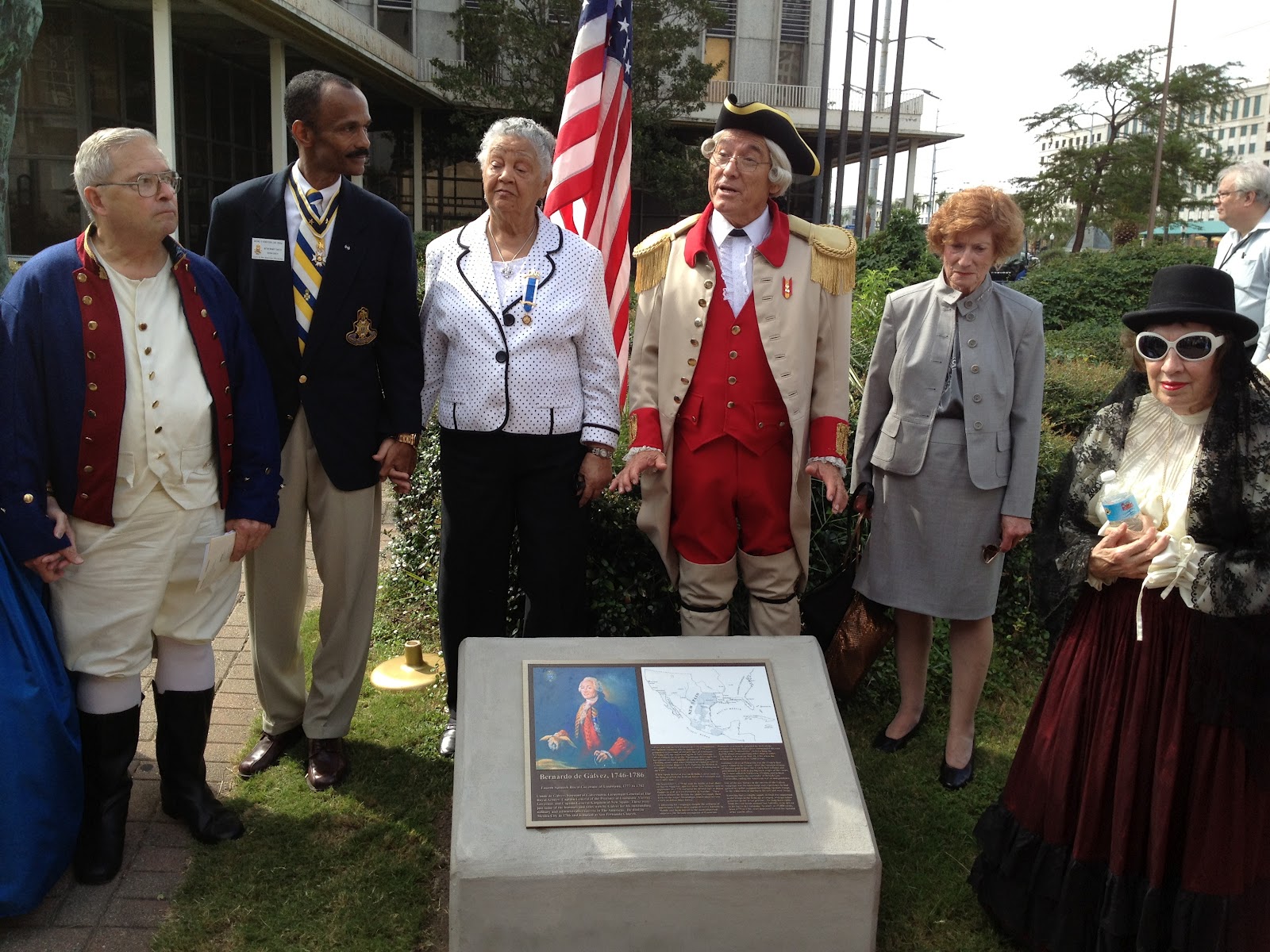
On Thursday, September 27, 2012, at 10:00 a.m. many gathered for an Unveiling Ceremony of the New Historical Marker for The Statue of Bernardo de Galvez located at the foot of Canal St in the City of New Orleans, Louisiana.  

Various Organizations and representatives in attendance were as followed:  Button Gwinnett Chapter, Georgia Society Sons of the American Revolution, New Orleans Chapter Daughters of the American Revolution, General Philemon Thomas NSSAR, Louisiana Society NSSAR, Lady Washington Chapter, NSDAR, Canary Islander Heritage Society of Louisiana, Canary Islander Descendants Association, San Antonio, Granaderos y Damas de Galvez, TX, Houston TX, Galveston, TX, Jacksonville, Fl, Pensacola, Fl, San Antonio TX, Washington, D.C.

This day celebration was especially significant for both me and my mother Mrs. Frances Jane Henderson a (member of the New Orleans Chapter DAR) because of the important role Governor General Bernardo de Galvez played in our family’s ancestral history.  That story can be seen here in the PBS segment of the history detective titled:  the Galvez Papers

Here are a few photos captured of the day's event.

Michael Henderson, LCDR USN Ret-President Button
Gwinnett Chapter Georgia Society Sons of the American
Revolution and Mr. and Mrs. Joel Escamilla,
 Granaderos Governor-General and
Members the Granaderos y Damas de Galvez
(Photo by Ms. Barbara Henderson)

Joel Escamilla,
 Granaderos Governor General
Addresses those in attendance
Photo by Ms. Barbara Henderson
Mrs. Frances Jane Henderson, Member of the
New Orleans Chapter Daughters of the American Revolution
Mother of Michael N. Henderson, LCDR USN Ret.
President Button Gwinnett Chapter Georgia Society
Sons of the American Revolution shares with those in
 attendance the significance of Galvez's Contribution
 to his Louisiana Creole Ancestry

Photo by Ms. Barbara Henderson 
Bernardo de Galvez
 played by
Mr. Robert Freeland
shares his appreciation of the
nearly forgotten Governor-General
Contribution to the American Revolution
Photo by Ms. Barbara Henderson
(L to R) Compatriot Ike Edwards,
 President of the Gulf port Mississippi Chapter SAR
Mr. Bertin "Bert" Esteves, (Center)
 member of Canary Islands Heritage Society of Louisiana
and
Compatriot William Allerton,
Past State President of the Louisiana Society
Sons of the American Revolution
(Photo by Ms. Barbara Henderson)
(L to R)Compatriot Clif Normard, LASSAR Registrar,
Compatriot Michael N. Henderson, LCDR USN Ret.
President Button Gwinnett Chapter Georgia Society SAR
Mrs. Frances Jane Henderson, Member of the New Orleans Chapter
Daughters of the American Revolution,
Mr. Joel Escamilla, Granaderos Governor General
(Photo by Ms. Barbara Henderson)
New Historical Marker
for the Statue of
 Bernardo de Galvez,
New Orleans, La.

(Photo by Mr. Michael Henderson)
Michael Henderson, his mother Frances Henderson
and several members of the
Canary Islands Heritage Society of Louisiana
(Photo by Ms. Barbara Henderson) 
As We all Gathered
So to We all Remembered
The Contributions of the Spanish Colonial
Governor-General
Bernardo de Galvez
(Photo by Ms. Barbara Henderson)
Michael Nolden Henderson, LCDR USN Ret
President
Button Gwinnett Chapter Georgia Society
Son of the American Revolution
(Photo by Ms. Barbara Henderson)

After the Unveiling Ceremony, We all gathered at the Galvez restaurant located in the French Quarter of New Orleans for a few acknowledgments of thanks for the local support and coordination of this successful event.  Here are a few of those photos captured on this day.

Ms. Cynthia Henderson Future member of the DAR and her Mom,
Mrs. Frances Henderson, Member of the New Orleans Chapter,
National Society Daughters of the American Revolution
 making their way over to the Galvez Restaurant
(Photo by Ms. Barbara Henderson)
Outside the Galvez Restaurant
(Photo by Ms. Cynthia Henderson)
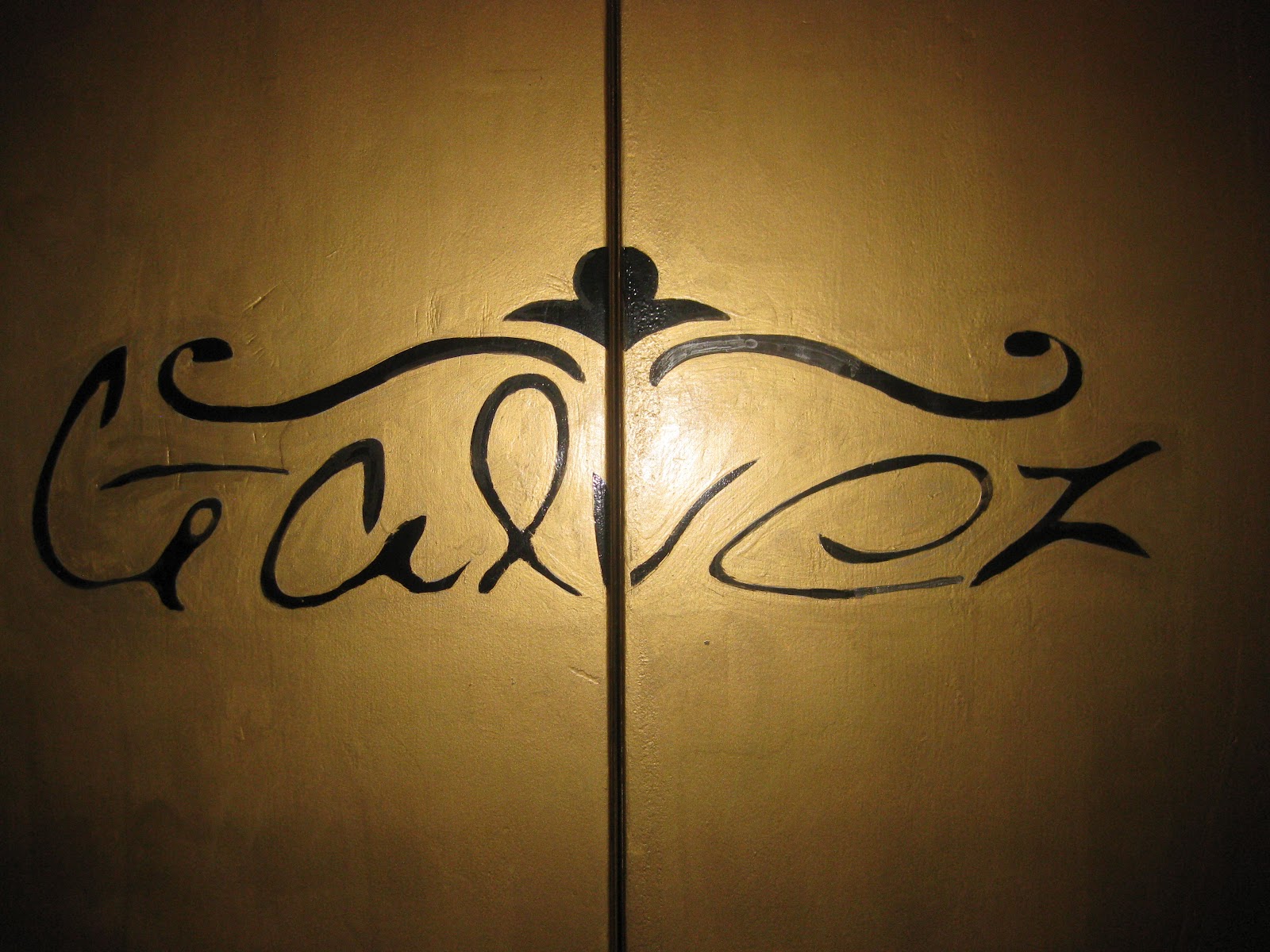
A Tribute to Bernardo de Galvez
on the wall of the entry way of
the Galvez Restaurant
(Photo by Ms. Cynthia Henderson)
Part of the main Dinner room of the
 Galvez Restaurant
Photo by Ms. Cynthia Henderson
Friends gather at the Ceremony at the Galvez Restaurant
(Photo by Ms. Cynthia Henderson)
Robert Freeland, Morgana King
of the New Orleans Art Council
 Cliff Normand
Photo by Mr. Michael Henderson
Barbara Henderson
 my sisters
and a Future member of the DAR
Photo by Ms. Cynthia Henderson
Yes we were all glad to be present for this
 historical marker unveiling for
Bernardo de Galvez
Photo by Ms. Cynthia Henderson
Four Ladies of the
 Louisiana Society Daughter of the American Revolution
(L-to-R) Ruth Autin, Gerry Ryder, Frances Henderson, Carole Gloger
Photo by Ms. Cynthia Henderson
Ms. Morgana King, Member of the New Orleans
Arts Council who assisted with
Coordinating the unveiling Ceremony is Presented
with a certificate of Appreciation from Mr. Richard Whynot
Member of the Granaderos y Damas de Galvez
(Photo by Mr. Michael Henderson)
Robert Freeland who dressed as
The Spanish Colonial Governor-General
Bernardo de Galvez is presented with a
 Certificate of Appreciate  by Mr. Joel Escamilla,
Granaderos Governor General
(Photo by Mr. Michael Henderson)
Head chef of the Galvez Restaurant
is presented with a certificate of
Appreciation byMr. Richard Whynot
Member of the Granaderos y Damas de Galvez
(Photo by Mr. Michael Henderson) 
Galvez
(Photo by Ms. Cynthia Henderson)

Also as a follow-up was an article published by the Louisiana Times-Picayune Newspaper titled see here: 

See more on my award-winning Memoir titled: GOT PROOF! My Genealogical Journey Through the Use of Documentation  which links Galvez to my 4th Generation Great Grandparent Agnes Mathieu and Mathieu

Thursday, September 27, 2012

A Few Reflections on my Discovery of Ancestors in French Colonial Louisiana


The video clip above was made a few years ago before I started documenting my ancestors whom I discovered lived during the French and Spanish colonial periods in Louisiana.  Interestingly enough, I have been successful in documenting many of those that I speak about in this video. One in particularly, was a French national, my 4th generation Great Grandfather by the name of Mathieu Devaux dit Platillo.

My discovery of him happened in a most interesting way and I will sharing part of that story in my new book titled,  Got Proof! My Genealogical Journey Through The Use Of Documentation .   I will keep you posted on the completion of the book which is due to be released soon. 

Wednesday, September 26, 2012

The Granaderos y Damas de Galvez


The Granaderos y Damas de Galvez  (Galvez Grenadier and Ladies)  is a non-profit, civic-patriot organization founded by Charles E. Barrera and Henry Guerra, San Antonio businessmen in 1975 in preparation for the U.S. Bicentennial Celebrations.  Eric Martel at that time the Spanish Consul General  in Houstan, Tx provided invaluable assistance.  Since then, the group has grown from the founding Chapter in San Antonio to include chaptersin Houston TX, Galveston TX, Jacksonville Fl, Pensacola Fl and Washington D.C.  The Organization welcomes opportunities to establish new chapters wherever there is interest.

The Mission of the Organization is to help educate the public about Spain’s substantial although generally little known contributions to the success of the American Revolution.  Members use every opportunity to expound on the life and accomplishments of  Bernardo de Galvez  , the namesake of the Organization.

Members includes professional and Amateur historians and educators who performed individual research, write articles and deliver speeches at public or private events.  Please see recent event held in New Orleans Louisiana for the Unveiling of the Unveiling Ceremony of the New Historical Marker for the Statue of Bernardo De Galvez on Sept 27, 2012.


 Also participates in civic-patriotic ceremonies and parades.  In most activities, wear Spanish colonial uniforms  and carry  the Betsy Ross colonial American flag  and the Burgundian Spanish colonial flag  to symbolize the collaborative efforts of General Georgia Washington and Bernardo de Galvez during the American Revolution war. 

Other photos of members in various uniforms:


Tuesday, July 31, 2012

Louisiana Colonial Document Project Underway

French and Spanish Documents
in
Storage boxes


Among the cultural and historical treasures in the custody of the Louisiana State Museum are some 70,000 handwritten records of the proceedings of colonial Louisiana’s French Superior Council (1714-1769) and Spanish Judiciary (1769-1803). Totaling almost a quarter million pages, the records have provided generations of historians, students, sociologists and genealogists with a rich source of data on New Orleans’s earliest days.
Here is a story of one Spanish Colonial  Louisiana document that also provided for a wonderful mystery on PBS program the History Detectives segment titled: click here:Galvez Papers 

In a race against time to save the antique documents, which in many instances are darkening, decaying and being eaten away by the acidic inks used in their creation, the Museum is re-housing the manuscripts and has committed itself to a multi-year, half-million dollar digitization and online publication project.
The project’s ultimate result will be a searchable online database of document scans and extant finding aids, freely accessible to anyone in the world with a web-enabled device. By making a tremendous body of source material readily available to researchers the world over, the project will offer up a fuller, more complete picture of daily life in colonial Louisiana, expand our knowledge of Louisiana history and culture exponentially, and provide new insight into our origins.

Because completion of the project is still several years away, the Museum is partnering with the LOUISiana Digital Library to publish some of the already-scanned documents online beginning in January 2012.

Known as LOUIS, and freely accessible at http://www.louisianadigitallibrary.org/, the LOUISiana Digital Library is a collection of digital resources—photographs, maps, manuscript materials, books, music, oral histories, etc.—from dozens of Louisiana archives, libraries, museums and other repositories. 

Completion of the colonial documents digitization and online publication project will require sustained effort and several hundred thousand dollars in funding over the next few years. The Louisiana Museum Foundation (LMF), the Museum’s major non-profit donor support group, is soliciting supporters and seeking grants to complete the project and to provide for management of the new digital resources to be created.

The French Superior Council and Spanish Judiciary records tell thousands of individual stories which, taken together, document the daily life of Louisiana’s first permanent European and African inhabitants, and of their relations with allied and enemy Native tribes. They are a treasure-trove of information and their publication on LOUIS will put critical source materials dealing with Louisiana’s history and culture at the fingertips of researchers and genealogists and will build support for the larger effort.
For more information about this project or to sign up as a transcription/translation volunteer, contact the Louisiana State Museum’s Director of Collections, Greg Lambousy, at glambousy@crt.la.gov or 504-599-1946. To make a donation to the project, contact Anne Atkinson at the Louisiana Museum Foundation, aatkinson@thelmf.org or 504-558-0493.  You invited to view the Galvez Papers here: http://video.pbs.org/video/1575582583/?starttime=1176060    

Friday, June 1, 2012

My Earliest Known French and Canadian Ancestors


Paternal  Side                                       Maternal  Side
                                                                                                                                                 Gen.
Jean-de Celle Duclos and Collet Lagnot    Pierre LeMoyne  and Judith DUCHESNE                  9th
                          native                                                              natives 
                      Noria, France                      St Jacques, Dieppe Rouen,Normandie, France
                              |                                                                           |
                    (Progenitors                                                           (Progenitors
    Duclos/Poisson family in Canada)                    Messier dit St Michel/LeMoyner family in Canada) 
    Gabriel de Celle Duclos married                                  Michel Messier dit St Michel Married  
                 Barbe Poisson                                                   Ann LeMoyne                               8th                        
                    Nov 19, 1652.                                                        25 Feb 1658
                               |                                                                          |
     Gabriel Lambert Duclos      married            Anne Messier de St Michel                      7th                                         
                                                        Aug 26, 1687
                                                                  |
                                 Alexander Duclos  married  Elizabeth Philippe                              6th
                                                                      21 Nov 1735
Alexander Duclos and his wife Elizabeth Philippe’s see here: 1735 marriage contract was the oldest marriage document I'd recently discovered. The names of their parents listed in that record also provided me another generation of family members that I would be able to use in following back through on both the paternal (Duclos side ) and paternal (Messier de St Michel side).  And once again, I have made an interesting discovery.
  
There appears to be some previously documented special history attached to the Duclos and Messier de St Michel family lines that I hope to learn more about. However, finding my way back to my 8th Generation great Grandparents have led me to understand how these two families first started here in North American, New France (Quebec Canada region) in the Mid-17th century.  
It appears to have started through family ties and contracted marriages to two women who were discovered as being  members of the Les Fillles a marier.   In my previous blog posting, you can read more about these ladies under the tiled: Les Filles à marier 1634 à 1663 
Below are two women in my ancestral line, my 8th generation great grandmothers whose names were Ann LeMoine or LeMOYNE and Barbe POISSON.   A short bio about their lives and the men they married are also proved.
Maternal  Side:
Anne LeMOINE ( LeMOYNE) from Dieppe, Normandy arrived in Canada in 1657.  She perhaps arrived with her sister, Jeanne.  Her brothers Jacques and Charles Lemoyne appear to have been already in Montréal.  All children of an innkeeper, Pierre Lemoine, in Dieppe, Anne was the youngest of this group of children, being 19 when she arrived in Canada.
Her uncle, Adrien Duchesne (her mother's brother), had been a surgeon in Ville-Marie (Montréal) from the years 1631 to 1648, so Montréal was her destination.  First mention of her in Montreal is 12-29-1657 where she is a witness to her sister's marriage contract.
In February 1658, she married Michel Messier, a fur  trader. 
He seems to have come to New France with Chomedey de Maisonneuv’s contingent, which arrived at Ville-Marie in the middle of November 1653.  Various relatives were already in Montréal.  Although Messiers's name does not appear on the muster-roll of contract workers, he must have crossed the ocean with them, for on the 10th of December, 1653 he signed as a witness to the promise of marriage between his cousin, Catherine Thierry and Charles LeMoyne de Longueuil et de Châteauguay, Anne Lemoine's older brother.
In the autumn of 1654, three years before Anne Lemoine's arrival in Montréal, a young Michel Messier was captured by the Iroquois; he was set free the following summer and taken to Ville-Marie by a Mohawk captain named La Grande Armée, in a prisoner exchange of sorts.
Subsequently, Messier became interested in land clearing, and on 11-4-1657, when he was 19, he bought from Charles LeMoyne, his soon-to-be brother-in-law, for 900 livres, a 30-acre piece of land called la provençale. On 2-18-1658 before the notary Bénigne Basset and in the presence of the notables of the town, he signed his marriage contract with Anne LeMoyne.
In 1661, after a short respite, the Iroquois raids on Ville-Marie started up again.  On March 24th, Michel Messier was again captured with a few settlers.  He now was the father of a two-year old daughter, and Anne LeMoyne was pregnant.    On June 22nd, eleven days after his second daughter was born, some Iroquois who had come to Montreal stated that Messier had been burned by the Onondagas and that they did not know whether he was still alive.  Life in Montréal was never simple.
But at the end of 1663, he was back again with his family after having made his escape.  In August of 1665, Anne LeMoyne had a third daughter.  In November of the same year, the Sulpicians signed over to him a 30-acre piece of land above the one that he already owned.  The 1667 census shows him as having 7 head of cattle and 30 acres under cultivation.  On 5-14-1668, Messier and his brother-in-law Jacques LeMoyne de Sainte-Marie received conjointly the fief of Cap-de-la-Trinité, which they divided between them on 8-1-1676.  Messier's portion was called Cap-Saint-Michel.
Above information taken from website Biography Canada, www.biographi.ca
Both Anne Lemoine and Michel Messier died in 1725 in Varennes... both were 87 years old.
Paternal  Side:  
Barbe Poisson was born about 1631 and died on January 7, 1711 in Montreal.  She married Leonard Lucault on October 12, 1648 and they had a daughter Marie born on July 01, 1650.  She grew up to marry Rene Cuillerier and gave birth to sixteen children.  Marie died on December 22, 1727 in Montreal.
Leonard Lucault died of injuries sustained in a raid by the Iroquois, on June 20, 1651; and Barbe then married Gabriel Celles on November 19, 1652.  Gabriel was born in 1626 at Nonant, Caen, Calvados, France; the son of Jean Celles and Colette Pagnot.  He arrived in the colony as a judge.
Barbe made a name for herself when in 1661, her husband was out working in the fields and the Iroquois launched another attack.  All those around watched the advancing Iroquois in terror, when Barbe sprang into action, grabbing an armload of guns and running with them to the men in trouble.  She reportedly said,  "I lost one husband to the Iroquois. I will not lose another".  According to Dollier de Casson's Histoire de Montreal:  "During an attack by 160 Indians in February 1661, only Le Moyne (De Loungeville) had a weapon with which to defend himself. Just as he was about to be captured he was saved by Mme. Celles Duclos, who brought him an armful of weapons."
Barbe and Gabriel had ten children before his death on November 15, 1671.    Return to click here: Finding Ancestral Proof on Paper and in Stone .

Thursday, May 31, 2012

Les Filles à marier 1634 à 1663

Les Filles à marier
1634 à 1663
Selon l'historien Jacques Lacourcière « De 1634 à 1663, plus de 200 filles célibataires viennent s'établir en Nouvelle-France. Prises en charge par les communautés religieuses, elles portent le nom de filles à marier.  En 1654, c'est la reine Anne d'Autriche, mère de Louis XIV, qui s'occupe de l'envoi d'une dizaine de filles à la colonie sous la conduite de religieuses.  Ces filles se distinguent des filles du roi parce que le voyage et leur établissement au sein de la colonie n'est pas financé par le roi de France».


Between 1634 and 1663, 262 filles à marier or “marriageable girls” emigrated to New France representing one quarter of all the single girls arriving in New France through 1673. They were recruited and chaperoned by religious groups or individuals who had to assure and account for their good conduct. In general, they were poor, although there were some members of the petty nobility among their ranks.
As opposed to the Filles du Roi who emigrated between 1663 and 1673, the filles à marier came alone or in small groups. They were not recruited by the state and did not receive a dowry from the King. They were promised nothing but the possibility of a better life. If they survived the perils of the crossing, they lived with the daily threat of death at the hands of the Iroquois. If they survived the Iroquois, they had to deal with the hard life of subsistence farming, harsh winters spent in a log cabin that they may have helped build, epidemics of smallpox and “fever” and difficult and often dangerous childbirth.
Crossing the Atlantic was a dangerous undertaking in the 1600s, and it is estimated that 10% of all passengers en route to New France died during the crossing. Sickness and disease were the main factors contributing to deaths at sea. Passengers were forced to share the hull with livestock that was either being shipped to the colony or served as meals during the crossing. While the passengers may have been permitted on deck during good weather and calm seas, storms forced their confinement to the hull where they were shut in not only with the livestock, but also with the odor of latrine buckets, seasickness and the smoky lanterns used for lighting. The climate and close quarters fostered the rapid spread of diseases such as scurvy, fever and dysentery. Under such conditions, very little could be done for those who were suffering. The method for dealing with the dead was to sew them up in their blankets and throw them overboard during the night.
The filles à marier chose to emigrate under perilous conditions to a wilderness colony because the advantages offered by the colony were great enough to make them forget the dangers of the crossing and rude character of colonial life. In France, the girls would have had little or no choice in their marriages because arranged marriages were the norm for the artisan and working classes as well as for the elite. Parental consent was required for men under the age of 30 and women under the age of 25. Young girls were placed in convent schools or pensions only to await a marriage in which they had no choice or to become a nun. In New France, these women could choose whom they wanted to marry and had the freedom to change their minds before the marriage took place.
Most of the filles à marier belonged to the rural class and were the daughters of peasants and farmers. A small number were from urban families, the daughters of craftsmen, day laborers and servants, while an even smaller number were the daughters of businessmen, civil servants, military men and the petty nobility. Their average age was 22, and more than one-third had lost at least one parent. About 20% were related to someone who was already a colonist. Most were married within a year of their arrival in New France. While waiting to find a husband, many of the girls lodged with religious communities –either the Ursulines in Québec City or the Filles de la Congrégation Notre-Dame in Montréal– although about 100 filles à marier lodged with individuals.
Peter J. Gagné has defined the qualifications to be considered a fille à marier as follows:
Must have arrived before September 1663
Must have come over at marriageable age (12 thru 45)
Must have married or signed a marriage contract at least once in New France or have signed an 
                enlistment contract
Must not have been accompanied by both parents
Must not have been accompanied by or joining a husband

[Source: Before the King's Daughters: The Filles à Marier, 1634-1662 by Peter J. Gagné. Pawtucket, RI: Quinton Publications, 2002. pp 13-38]

Two of my female ancestors (8th Generation Great Grandmothers -  Ann Le Moyne and Barbara POISSON were discovered to be Les Filles à Marier .


Tuesday, May 15, 2012

Louisiana Patriot of the American Revolution- Pierre Frederick d'Arensbourg, Sr.


On March 15, 2012, Pierre Frederick d'arensbourg, Sr. was approved and is now recognized by the National Society Sons of the American as a Louisiana Patriot.  He becomes my family's 3rd direct lineal Louisiana ancestor (5th generation Great Grandfather) documented as such and will be forever remembered for his service and contribution during the war of independence with England.